Local Culture History Wisconsin
Postcards From The Past
an anthology of micro-stories, weathered images and timestamps from Chippewa Valley history
Evelyn Nelson, design by Anna Lynch |
Local Culture History Wisconsin
Evelyn Nelson, design by Anna Lynch |
Maybe you remember the revolving wire racks of vibrant keepsakes which document notable places and spaces during travels: the wrought iron lattice of the Eiffel Tower, sun-drenched Florida beaches, the towering Empire State Building and those ever-present “I Love New York” motifs.
Then again, you might belong to the tight-knit circles and regulars part of Eau Claire’s dive bar scene, penning a few lines while nursing a $1 Hamms – thinking of a distant friend you wish could join you for a pitcher of beer.
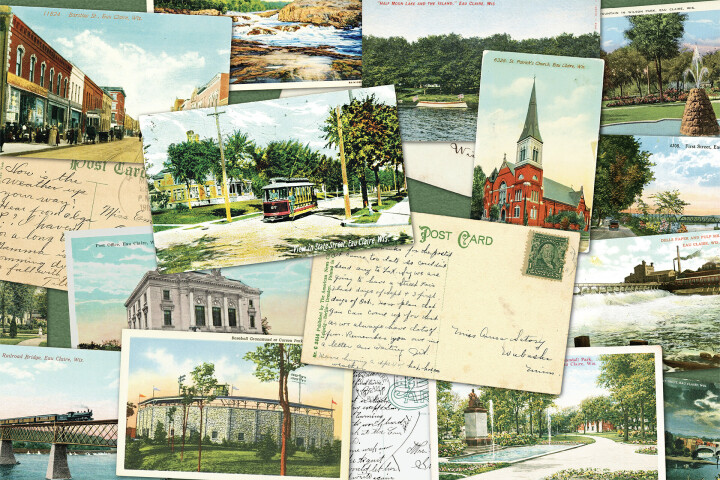
Either way, there’s something to be said of the timeless act of giving or receiving a postcard from friends, family – even strangers. For Chippewa Vallians, these four-by-six-inch keepsakes serve as more than a kind-hearted exchange. They offer a meaningful glimpse into what was important to locals of the time.
In conversation with regional collectors, antique vendors, museum archivists and longtime locals, we’re making the case for a handwritten history lesson – as we uncover postcards of the past that capture the Chippewa Valley’s evolution and the people who documented it.
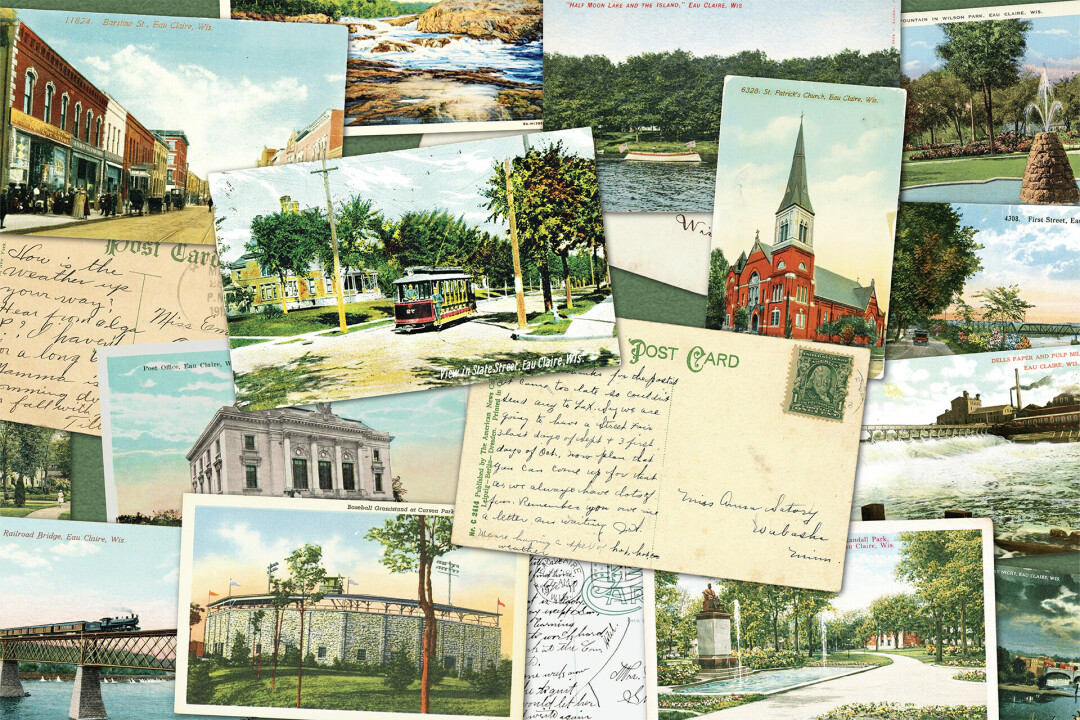
To begin our exploration of the Valley’s legacy of penned correspondence, we turned to Melissa Holmen, an archivist with the Chippewa Valley Museum (CVM) in Eau Claire.
As a former exhibit developer and most recently, the museum’s archivist, Holmen credits her enthusiasm for public history – and more pointedly, Eau Claire’s history – to an ongoing review of the CVM’s collection of archival images, which spans approximately 24,000 individual snapshots.
Amidst these thousands of images, the CVM holds 1,877 postcards in its collection – ranging from the late 1800s to early 2000s.
Diving deeper into the stats, a significant portion of this collection – 551 postcards – is dedicated solely to Eau Claire locations. A separate assortment of the CVM’s archival postcards focus on neighboring cities, such as Altoona, Chippewa Falls and Colfax, Holmen explained.
“We are really intentional about the community’s collection; We want to care for the history of our community that is happening today and tomorrow too,” Holmen said of her work.
“We coordinate with the (University of Wisconsin-Eau Claire archive as well as the (Eau Claire) public library so that our collections do not overlap,” Holmen continued. “We’ve also dedicated countless hours of volunteer and staff time over several years to digitize every postcard and image in the collection.”
With hundreds of handwritten history lessons at her fingertips, Holmen said it has become very rare for the CVM to not have a postcard in their possession. Her ongoing mission: while the collection includes a vast array of dates across Chippewa Valley history, a mere 150 have been stamped following the year 1950.
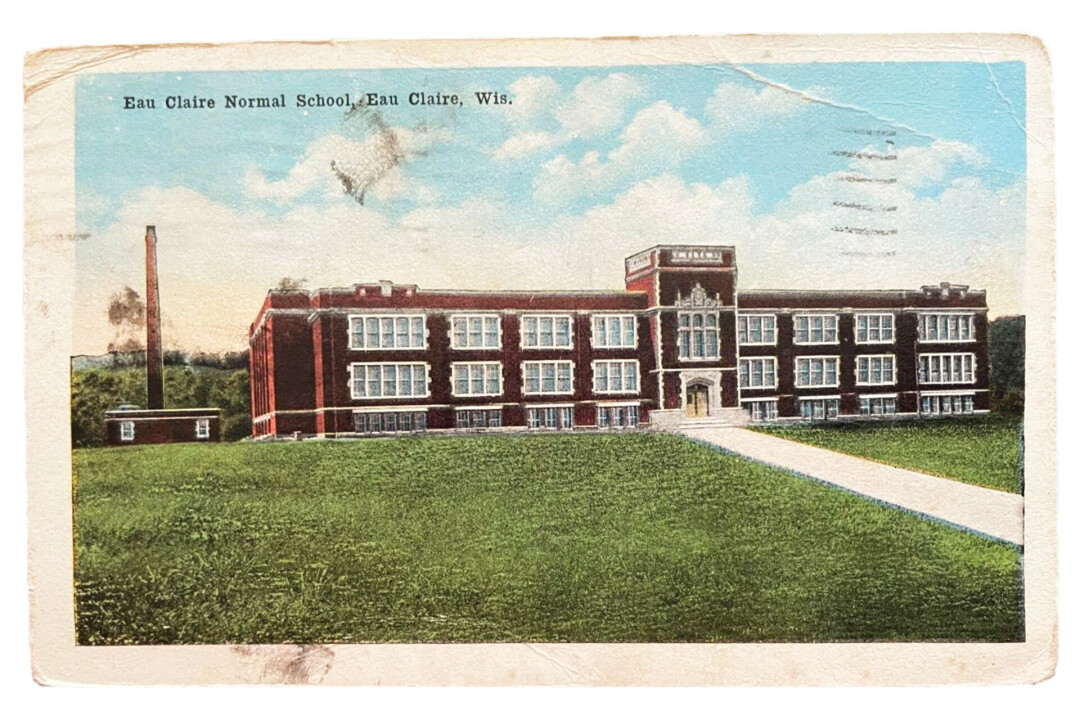
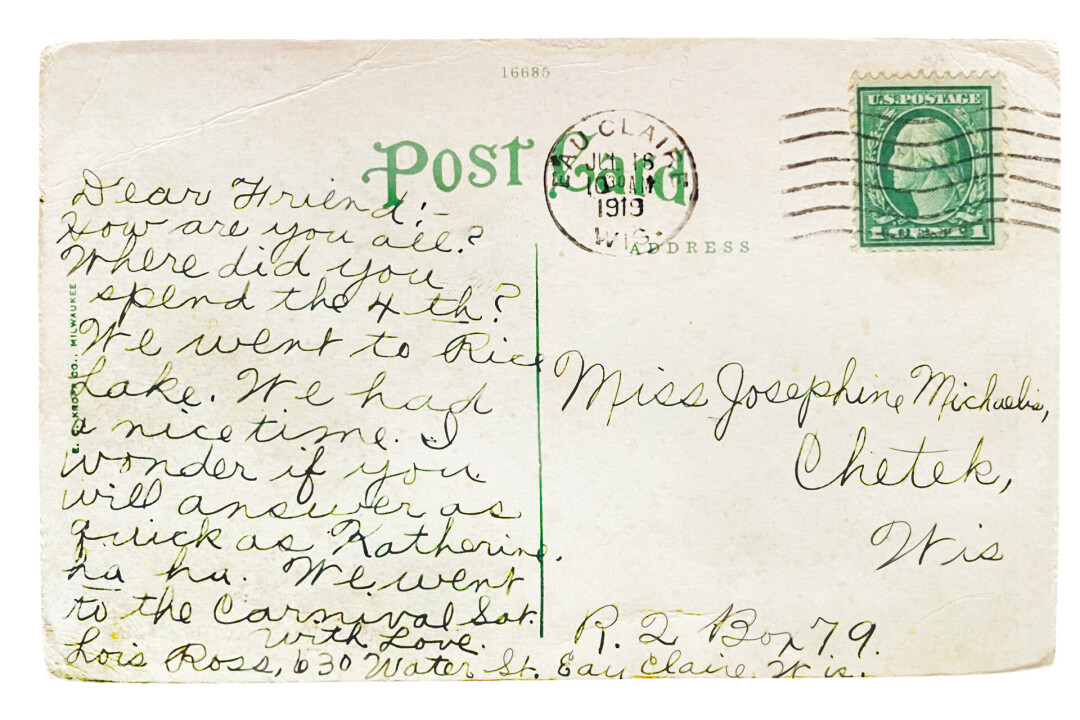 In this vein, the museum works diligently to review and accept donations from community members and their own postcards passed on through generations.
“What’s surprising to me is that people (back then) would create their own postcards, with pictures of themselves on them. This is such a creative idea,” Holmen said. “When I think about it, I wonder why we don’t do this today very much.”
Examples of the unique and enduring views of Eau Claire, found in the CVM postcard collection, include the scenic bends of the Chippewa River and former use of Half Moon Lake – once “filled to the max” with cut logs from the city’s lumber industry.
Between Holmen and the other museum staffers, postcards serve as a gentle nudge to spend time in locations like Carson Park – where the museum resides – and remember just why the community has always been a place worth remembering.
As we meander down memory lane, a Tuesday along Water Street led me to a timeless Eau Claire refuge: The Joynt. Along the paneled walls of this beloved local bar, a collection of colorful handwritten greetings have been tacked into place.
The Joynt’s postcard tradition began in the early 1970s, shortly after proprietor Bill Nolte took over the bar. While spending time in Ann Arbor, Mich., Nolte felt the urge to write to a friend – but realized a scribbled note on a coaster or napkin simply wouldn’t do.
Upon his return to Eau Claire, he commissioned custom postcards and established a mailbox stocked with stamps. As these initial postcards were dispatched, regular patrons quickly reciprocated this act and mailed their own cards back to The Joynt from almost every corner of the globe.
Today, stamped postcards at The Joynt remain $1 to purchase and showcase images of the bar’s character, from its worn barstools to the legendary “No Light Beer” signage.
According to current bartenders, up to five postcards are still sent out weekly. The Joynt’s ever-changing anthology of personalized history, tacked up on its walls, has routine refreshes from new travels – a juxtaposition from close to 50-year-old postcards still on display.
“I was thinking about a postcard I got from a friend and I can (still) recall the exact season I got it,” Ted Semling, a bartender at The Joynt for three decades, said. “(Postcards are) a physical connection to a time and place that you don’t forget – it’s like a smell or a song.”
“I can look back and pick up any of those (postcards) off the wall and go somewhere – I can go to Istanbul or Florida and read whatever they had to write,” Semling continued. “It’s a physical time capsule that’s at the ready.”
Across the river in Chippewa Falls, ‘time capsules’ can be found in the form of shoe boxes at Collective Charm. Amidst a group of over 70-plus vendors, who curate displays of antique, upcycled and restored goods, Barbara Peloquin has sold and acquired what she describes as thousands of postcards that depict the Valley’s history.
“I have hundreds of shoe boxes full (of postcards),” Peloquin, the owner of River Street Antiques in Collective Charm, said. “To quantify how many (I) have … 1,100 holiday cards are only three shoe boxes.”
While Peloquin doesn’t know exactly when her love for paper ephemera and postcard collecting began, she attributes the journey to a few different factors: postcards serve as artwork, especially her seasonally-themed cards; her husband’s father previously owned a gas station and over time, postcards previously for sale portrayed memories of that physical space; her ongoing fascination with local history and the Chippewa Valley’s main street businesses.
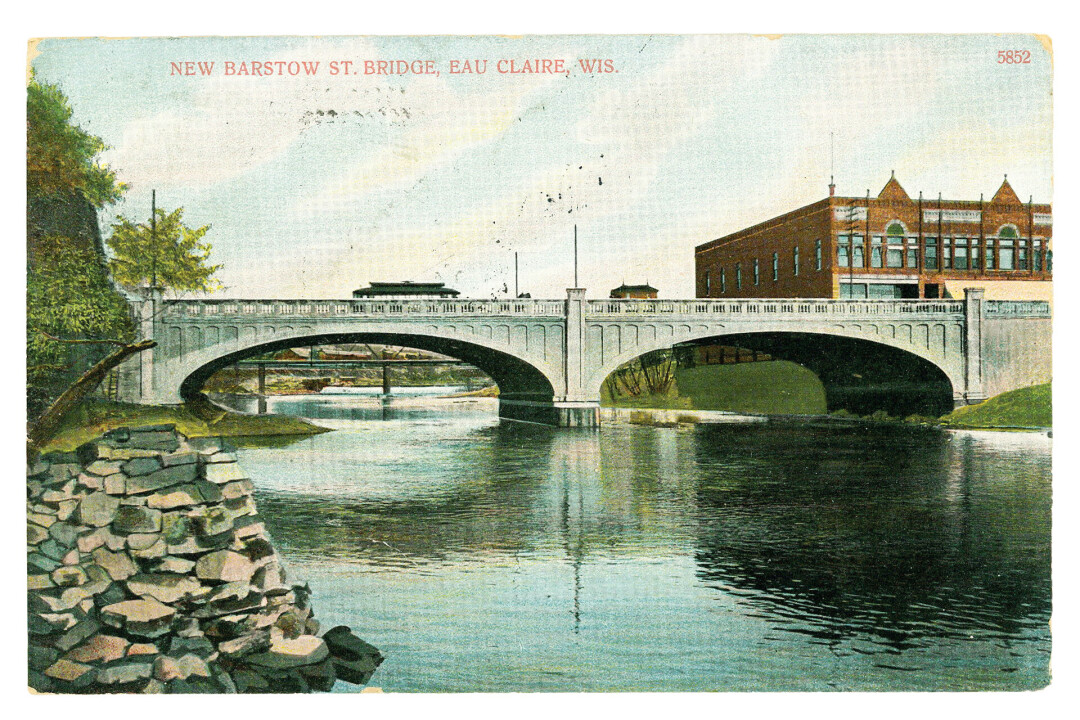
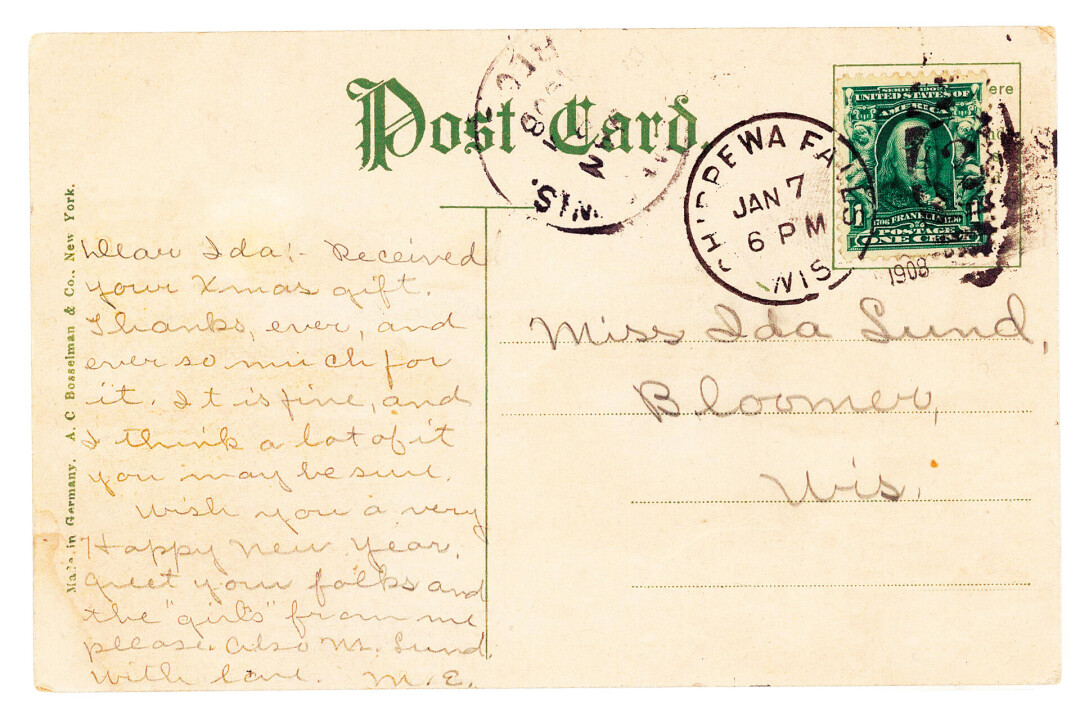 Over time, Peloquin observed metropolitan areas have amassed large volumes of images and postcards. In contrast, smaller towns such as Chippewa Falls and Eau Claire had fewer cards and in turn, made those mementos more unique and harder to find.
“I think the interest (here) locally, in particular, is when you can get a real photo postcard, because those aren’t going to be as mass produced,” Peloquin said. “You can see details and images that you don’t normally see.”
Whether at Collective Charm or through her online postcard sales through eBay, Peloquin said her customers will often purchase local antiques tied to family. She has sold photo postcards of family homes in the Chippewa Valley to sentimental memories of a specific motel where one’s parents once spent their honeymoon.
“I just started a little section down at Collective Charm with more local paper in it. I’ve debated whether to put some of my Chippewa (Falls) and Eau Claire postcards out there – and I probably will,” Peloquin said.
“I do actually find that down there, there are a lot of people actually interested in local things. … It’s almost like they are bringing something back home,” Peloquin continued.
Having now learned a new catalog of stories about the Chippewa Valley through its paper goods, it seems there is a case to make for the continued physical mail exchanges between locals and their loved ones.
Even better yet, the art of postcard collecting has never left the Valley’s brick-and-mortar shops. Whether as a souvenir or small, affordable art form, it’s not just visitors who have picked up an image of downtown Eau Claire or the Chippewa River to display their regional pride.
“Small sized art – like postcards – remind me of why I value our community so much. It’s a $1-$2 way to appreciate what our town offers every single day,” Holmen said. “It is a really interesting way to see what people have loved about our town since it began.”
As these folks continue to help members of the community find answers to their local questions and curiosities, you too can help document new versions of Chippewa Valley history and just what makes it a “picture postcard” place.
In any case, this recount gives us all a little something extra to think about the next time we see a faded postcard out in the wild.
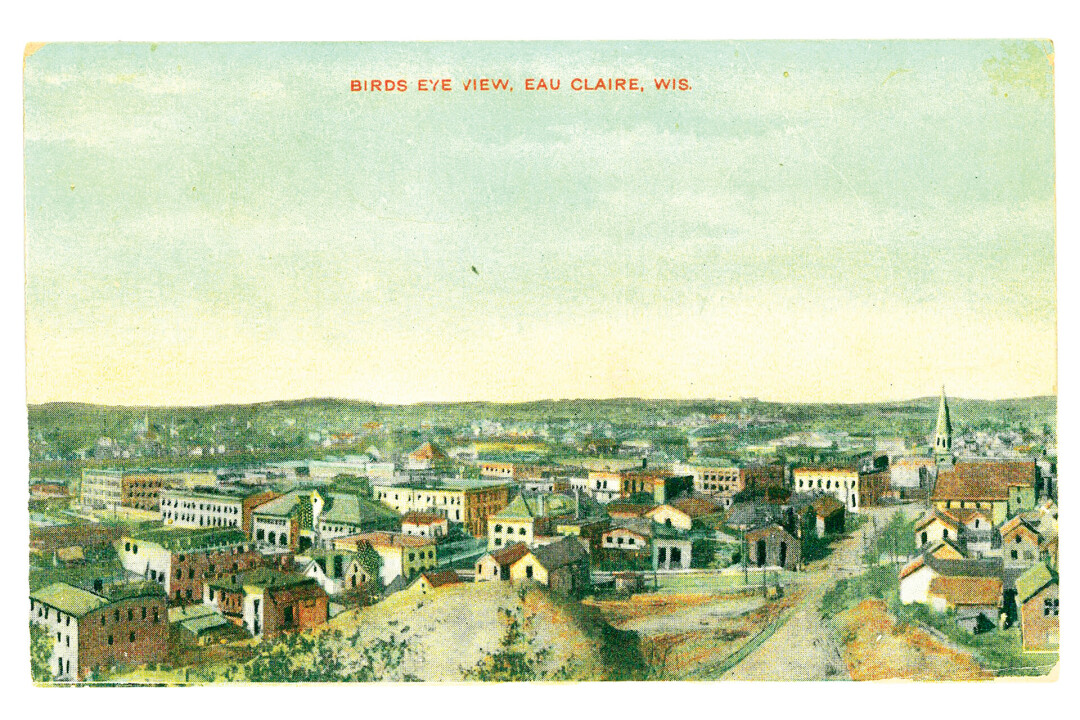
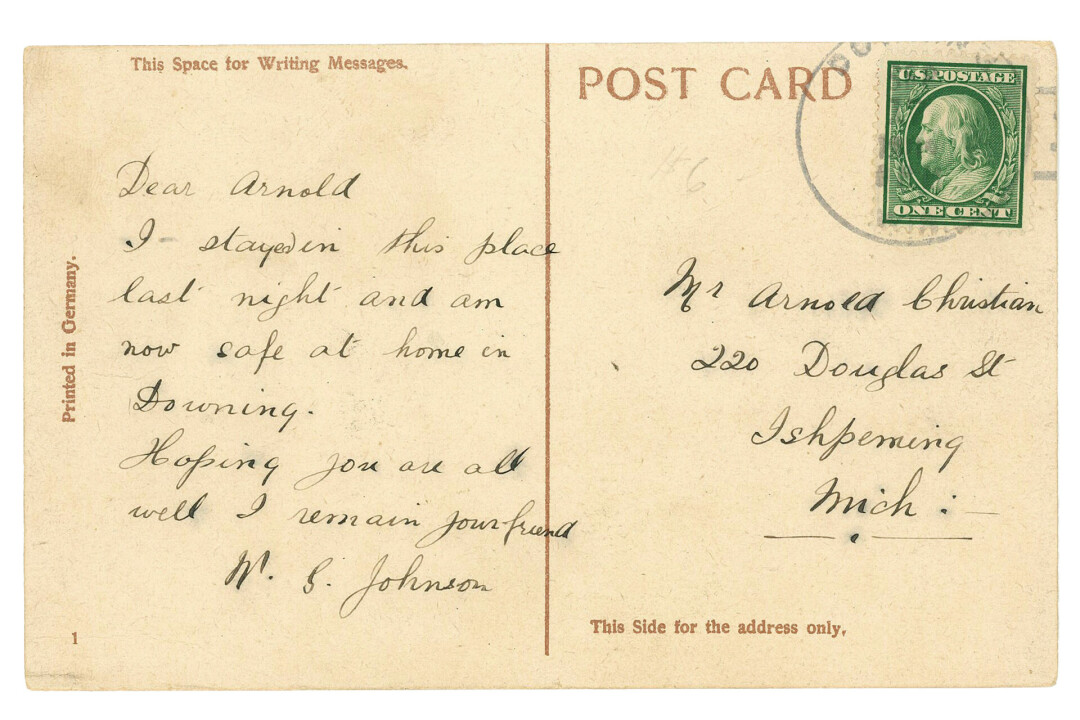
Check out the new Eau Claire 'Postcard Greetings' Puzzle, available exclusively at The Local Store (205 N. Dewey St., Eau Claire), featuring real vintage and local postcards. Also online at TheLocalStore.org. A variety of Chippewa Valley postcards are available in person, to purchase send to your loved ones.
Patrons of the Chippewa Valley Museum (1204 E Half Moon Dr., Eau Claire) can access the complete archive of photographs and postcards, by making an appointment to review scans and view any featured images on display in its rotating exhibits. To learn more about submitting your own postcards of the Valley to its collection, email a photo to info@cvmuseum.com.
The Joynt (322 Water St., Eau Claire) is open seven days a week: Sunday through Thursday, 1pm-2am; Friday and Saturday, 1pm-2:30am.
Collective Charm (16 W Columbia St., Chippewa Falls) is open seven days a week: Monday through Thursday, 10am-5pm; Saturday, 10am-4pm; Sunday, 12pm-4pm.

PUBLISHER / EDITOR / OWNER
Nick Meyer
Staff • Contributors • Careers
Have questions? Email us: • editorial@volumeone.org(Editorial,) • web@volumeone.org(Website,) • manager@thelocalstore.org(Store,)
Terms of Use / Privacy Policy | ©2002-2026 Copyright Volume One Magazine