

Breaking Down The City Of Eau Claire Compost Ordinance
new small-scale residential, large-scale organic waste requirements could take effect in 2027 if approved at Aug. 11 city council meeting
Evelyn Nelson, photos by Andrea Paulseth |
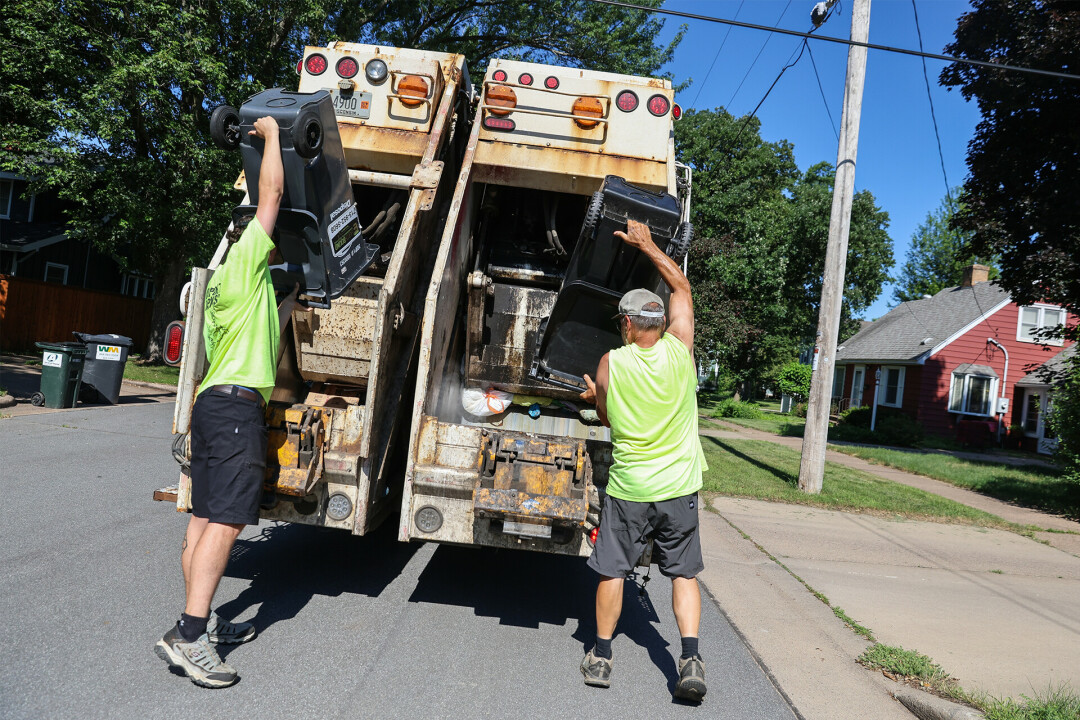
In an effort to divert organic waste from landfills in Eau Claire, the City Council is considering a proposed ordinance on “management of waste and recyclables.” Authored by council members Andrew Werthmann and Joshua Miller, this ordinance would regulate composting activities in four tiers if passed.
Tuesday, July 28 was the ordinance’s first official introduction; per council bylaws, residents can speak on the ordinance during public comment at the Aug. 10 meeting. The next day, Aug. 11, council will vote on the ordinance.
In Eau Claire, current waste haulers include GFL Environmental, Waste Management, Earthbound Environmental Solutions and Harter’s Expert Disposal. Some of these larger entities, Werthmann shared, already have composting systems in place throughout other metro areas in the Midwest.
“We are trying to meet what is already in the missions of these larger institutions that do trash and recycling for our community,” Werthmann shared at an ordinance discussion on July 9. “The idea of having compost be a part of the (waste) service – regardless of what it looks like – is something that we think is supported not only by the council but by the community.”
If this ordinance passes, composting activities throughout the city would be categorized into tiers based on scale, location and materials accepted:
Suggested Four-Tiered Composting System for City of Eau Claire
Tier One: Residential On-Site Composting (Small Scale)
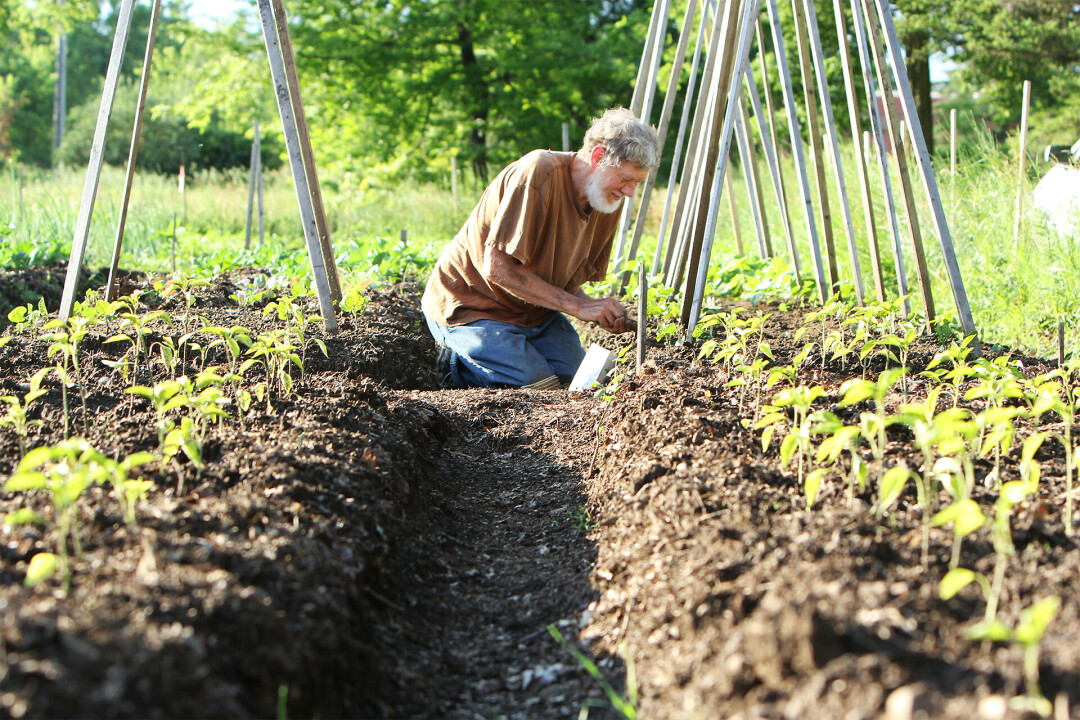
- What is it: Small-scale composting done by a resident on their own property
- Size limit: Up to three cubic yards in volume
- Where it must go: In the rear or side of yard, at least five feet away from property lines and buildings
Tier Two: Community Composting (Medium Scale)
- What is it: Medium-scale composting done in a site (e.g., backyard or community garden) which can accept organic materials brought in from off-site (by neighbors, students, or employees of the host property)
- Size limit: More than three cubic yards and no more than 10 cubic yards
- Permits: The owner must register their composting actions with the City (a form would be provided, if ordinance approved) and may have to pay a registration fee
- Where it must go: In the rear or side of yard, at least 15 feet away from property lines and buildings
Tier Three: Intermediate-Scale Composting
- What it is: Large-scale composting operations at entities not limited to a school or university (e.g., University of Wisconsin-Eau Claire) that requires active management and a formal city permit
- Size limit: More than 10 cubic yards and no more than 50 cubic yards
- Permits: This tier would require a City permit before starting, to be renewed annually. The owner must submit a site plan and pay a permit fee
- Where it must go: At least 50 feet away from all property lines and 50 feet away from any buildings not associated with the composting effort
Tier Four: State-Regulated Large-Scale Composting
- What it is: Commercial-scale operations for composting
- Size limit: Any amount exceeding 50 cubic yards (this would include raw materials, but excludes finished compost materials)
- Permits: Operators cannot begin this tier of composting until they obtain all required state approvals – specifically from Wisconsin Department of Natural Resources (DNR) – as well as local City of Eau Claire codes and land-use rules
Compostable materials – listed in each of the four tiers and the ordinance’s definitions – include yard waste (grass clipping, leaves, etc.), plant-based food scraps and other organic materials. Items that cannot be composted include meat, fish, bones, dairy products, eggs (except eggshells), oils, grease – or any foods containing these items.
According to Werthmann and Miller, work sessions throughout the past two years during the City of Eau Claire’s Sustainability Advisory Committee (SAC) have brought these composting discussions forward to council and the general public.
Between the recent July 9 presentation and first reading of the ordinance on July 28 at City Council, council members removed one proposed requirement that would have made waste haulers in the area include composting options for every customer in their service.
“Haulers do not have any permitting details to think about with this ordinance,” Werthmann said of the change. “What we (did) add in this ordinance is a Special Collections section, meaning that a hauler could decide they just want to pick up compost in the city if they wanted.”
Waste haulers both small and large across the city expressed the lack of composting infrastructure or trucks ready to offer these services in the community.
Currently, Earthbound Environmental Solutions is the sole waste hauler in Eau Claire which offers a comprehensive composting program for residents, commercial businesses and more.
Recent Trash Studies In The City Of Eau Claire, Next Steps
In an effort to address residents' complaints regarding delays in both garbage and recycling services in 2022, the City of Eau Claire worked alongside the Wisconsin Policy Forum – a nonpartisan, statewide research group – to conduct a review of the City's approach to waste collection from 2023 through 2024.
The study resulted in a 25-page report, noting Eau Claire's “open market” system is unique compared to other Wisconsin cities of comparable size. Most of those communities' trash and recycling services are completed by the City, using City-owned trucks.
Additionally, analysis suggested while “shifting to another model may improve services and reduce costs for Eau Claire residents, it would be wise to proceed with caution, as there are challenges and potential pitfalls with changing to either in-house garbage and recycling services or contracting with a single hauler.”
At the beginning of 2026, then Deputy City Manager Dave Solberg announced the City would resume progress to develop a new business plan and model for waste hauling across Eau Claire.
Brandon Lechleitner, the City of Eau Claire neighborhood services specialist, and John Culbertson, a principal of MSW Consultants (a Florida-based consulting firm specializing in recycling, organics and waste management) have been tasked with completing a new study. That study will inform the creation of a business plan for future City-operated trash services.
According to Solberg, during the July 9 composting discussion, that forthcoming trash study will incorporate feedback received from constituents on organic waste management – in addition to the consultant's findings – to be released later this August or September.
For Jasie Mullen, a sales manager at Harter’s Expert Disposal and former owner of Trash On Trucks, this change in the proposed ordinance proved essential.
If the ordinance had passed without that change, haulers would have had to transform their business models to continue serving residents in Eau Claire. They would have needed to navigate new legal mandates, insurance requirements and overhead costs to acquire specialized equipment to separate organic from regular trash streams.
Mullen also echoed those waste hauler representatives who spoke during the July 9 meeting. Several stated they were not involved or consulted during the initial drafting stages of this proposed ordinance.
“We were not pulled in, we were not consulted on this composting (ordinance),” Mullen said. “I was certainly surprised to hear that composting has been a big issue over the last year … I have my nose deep in the trash and I haven’t heard anything about it.”
Both Werthmann and Miller cited the ordinance, in its latest form, would designate one or more drop-off sites for compostable materials, in lieu of implementing waste hauler requirements.
Eau Claire Community Services Director of Eau Claire, Lane Berg, would have the authority to establish future rules regarding the types of accepted materials for these drop-off sites, hours of operation and to ensure safe operations.
If passed by council, the composting ordinance would take effect Jan. 1, 2027.
Eau Claire residents can stay up to date on City Council public hearings and legislative session agendas, online at eauclairewi.gov. Questions for the two authors on the “Management of Waste and Recyclables” ordinance can be directed to Andrew Werthmann (Andrew.Werthmann@Council.EauClaireWI.gov) and Joshua Miller (Joshua.Miller@Council.EauClaireWI.gov).