

City of Eau Claire Considers Feasibility Study For ‘Riverwalk District’
Aug. 19 Redevelopment Authority meeting could result in RFP for a feasibility study on new redevelopment district along Chippewa River
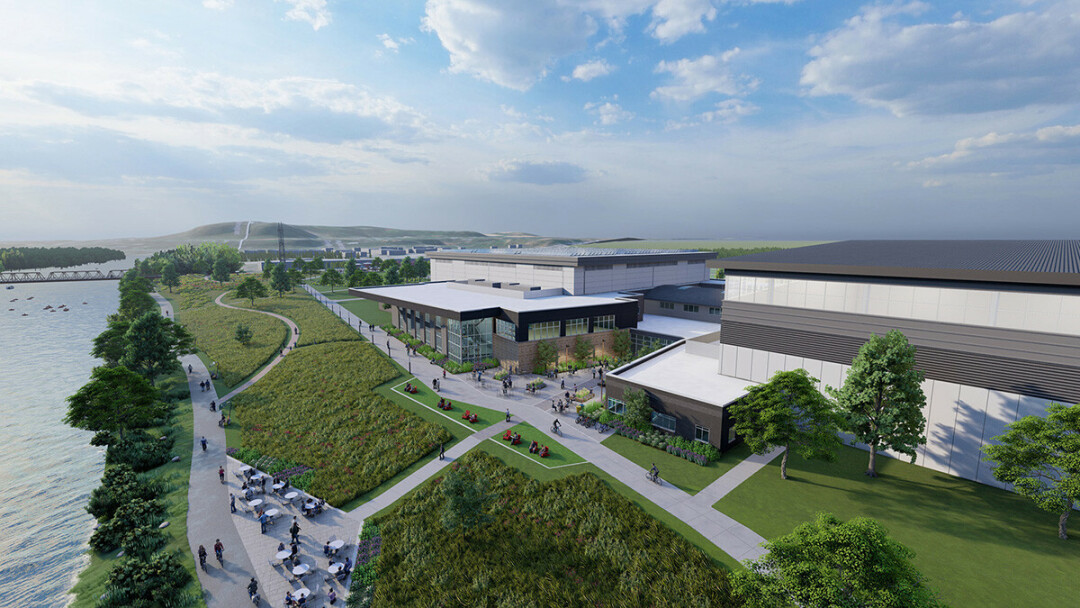
As first reported by Volume One, the formal introduction of two longterm redevelopment plans in the city of Eau Claire was made to City Council this June. On Wednesday, Aug. 19, a Request for Proposal (RFP) could be authorized by the City, calling for a feasibility study on one of those plans – the Core Reinvestment District.
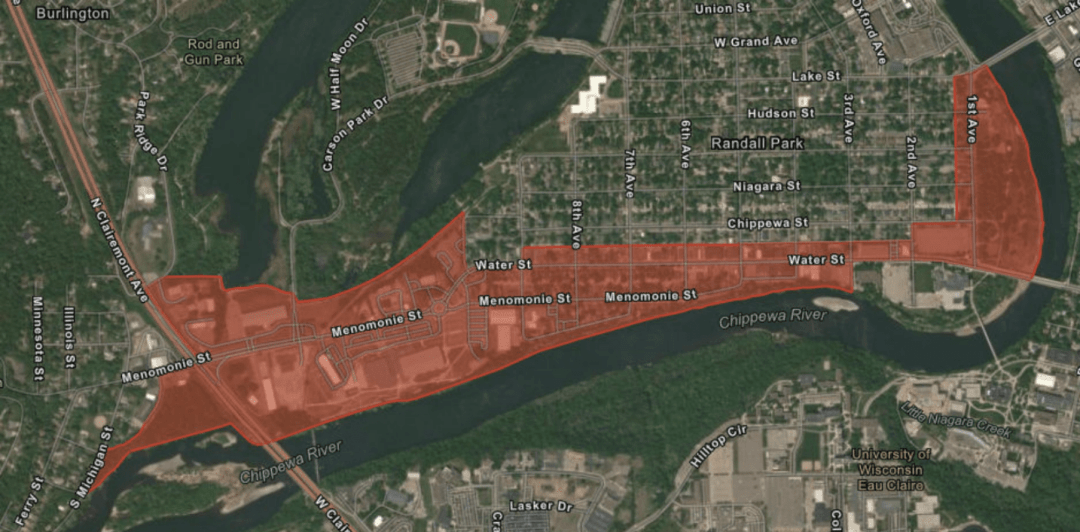
The Core Reinvestment District (CRD) includes numerous neighborhood areas stretching from Lake Street to Clairemont Avenue, down Water Street and south past The Sonnentag Center.
As the Eau Claire Economic Development division describes it, the CRD’s focus is on redevelopment and addressing “aging housing stock, obsolete commercial properties, vacant or underutilized parcels, and portions of federally designated Qualified Census Tracts.”
The study would look to answer “fundamental questions” before the RDA considers detailed design or implementation efforts to the CRD.
Both long-term redevelopment plans – the CRD and the Riverbend Redevelopment District – were created as the City of Eau Claire Redevelopment Authority (RDA) looked for its next areas of focus.
These areas of potential redevelopment followed decades of successful efforts in the North Barstow and Cannery Districts. (The most recent project completed as part of those efforts is likely the Cannery Park and playground.)
The Aug. 19 RDA meeting, slated to begin at 7:30am at City Hall’s North Conference Room (203 S. Farwell St., Eau Claire), includes discussion and potential action on the “riverwalk district” portion of the CRD (those areas from 1st Avenue down to Water Street and Menomonie Street, closest to the Chippewa River).
"A successful riverwalk would need to function as more than a pathway along the river. The study should consider what brings people to the area, gives them reasons to stay, and encourages repeated use."
EAU CLAIRE REDEVELOPMENT AUTHORITY
AS WRITTEN IN the crd FEASIBILITY STUDY PROPOSAL
A feasibility study is the next step of the City’s redevelopment process. The cost to conduct the study has not been determined, because an RFP has not been issued. (The RDA does have an annual budget, and went into FY2026 with about $200,000.)
The study would look to answer “fundamental questions” before the RDA considers detailed design or implementation efforts to the CRD.
Those questions, per the RDA’s Aug. 19 meeting packet, include “what types of commercial, recreational, cultural, or public uses could realistically be supported along the corridor?”, “how do nearby residents, businesses property owners, and other users currently experience the river corridor and what opportunities or concerns should be considered?” and “could improvements be completed in phases rather then one large project?”
To the latter’s point, even the initial “study timeline” draft document includes five phases.
Proposed Phases of Riverwalk District Feasibility Study
Phase one would be focused on the project’s kickoff and stakeholder engagement (which would include the identification of key stakeholders, like residents and developers), plus “a project communication approach” to determine how project information will be shared with the public during the study.
Phases two and three would dive into the current conditions of the proposed riverwalk district and economic analysis of the area (studying riverwalk districts in other communities, considering community benefits and redevelopment potential).
Phase four would “translate the study’s findings into realistic conceptual options” for the riverwalk area, then gather community feedback during several rounds of engagement efforts. The end of this phase would deliver preliminary implementation plans.
Phase five includes risk assessment, regulatory and permitting information, funding strategies and end with recommendations for future project phases and engagement.
The final phase, phase six, would be the final presentation – following completion of all aforementioned phases – of the feasibility study.
The RDA also offered several "key considerations" as part of its feasibility study proposal, including its ask for a realistic look at economic development:
"A successful riverwalk would need to function as more than a pathway along the river," the RDA wrote. "The study should consider what brings people to the area, gives them reasons to stay, and encourages repeated use.
"Restaurants, businesses, housing, recreation, cultural attractions, public spaces, events, and nearby employment can all contribute to activity. Particular attention should be given to how the riverwalk could function throughout different times of day and different seasons while remaining compatible with surrounding neighborhoods."
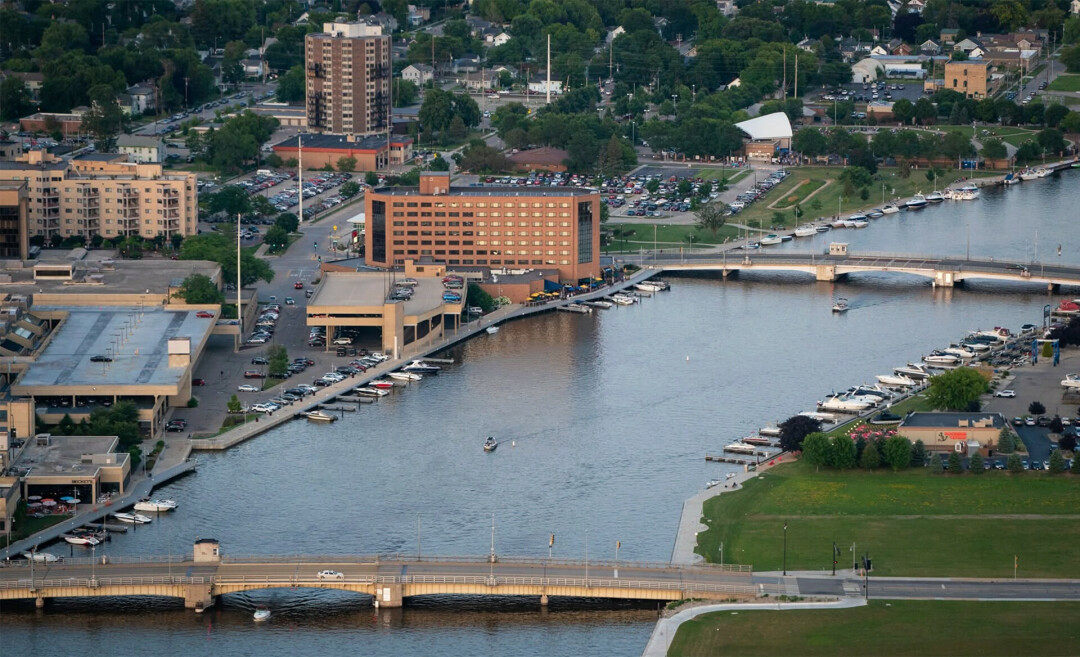
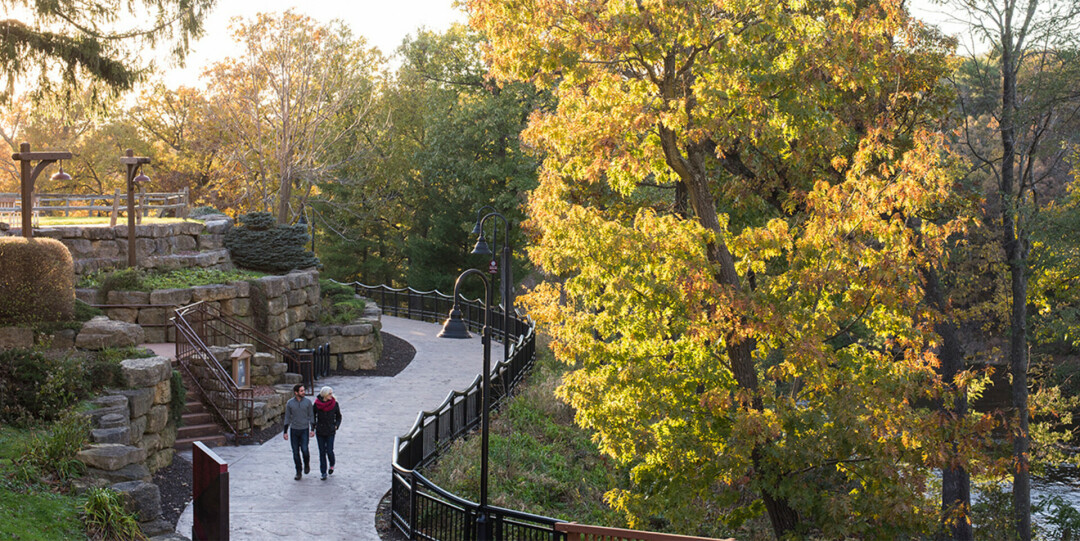
This proposed feasibility study RFP, if authorized for issuance, could be the kickoff of a new era of redevelopment in Eau Claire and the beginnings of a long-term riverwalk district.
The Riverbend Redevelopment District, the other long-term redevelopment plan in very early stages, encompasses clusters of properties along Clairemont Avenue, including the former HSHS Sacred Heart Hospital campus now home to The 900 District venture.
Keep up with Volume One for updates on the Core Redevelopment District project. Learn more about the City of Eau Claire Redevelopment Authority, which typically holds public meetings on the third Wednesday of each month, online.