
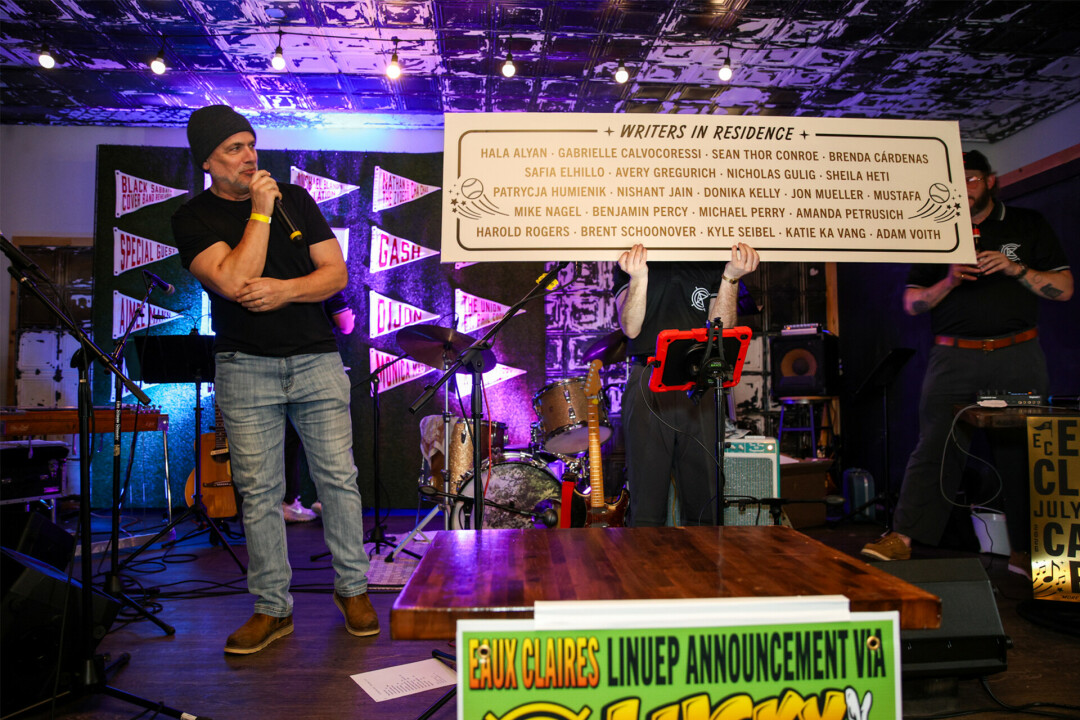
Get To Know The 2026 Eaux Claires Writers In Residence
poets, illustrators, playwrights and more will present collaborative sessions at the arts and music festival in neighboring Chippewa Valley Museum spaces, July 24-25
words & photos by Evelyn Nelson
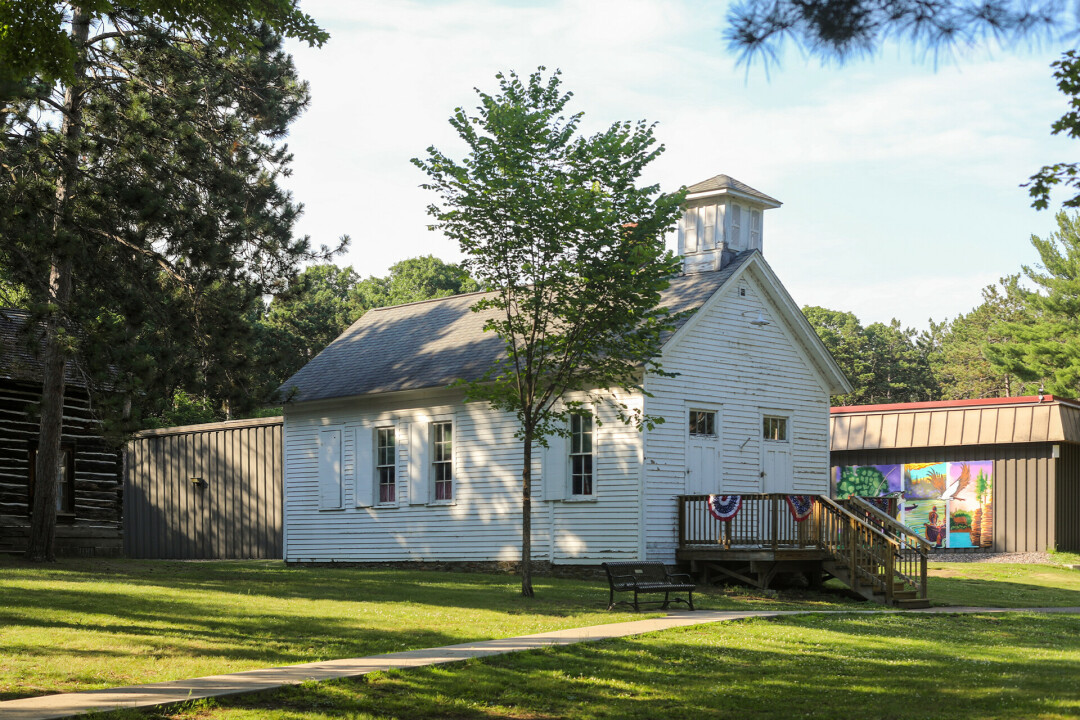
“Let’s say you go to a music festival and wander off the obvious, to hear a poem tucked in a lumberjack museum. Watch a one-act play in a one room schoolhouse. Novelists trading licks from atop their snowplow trucks. A sneaky artist sketching all of us…”
The Eaux Claires music festival narrator and best-selling author from the Chippewa Valley, Michael Perry, shared this excerpt earlier this month. He invites locals and travelers alike into a serene scene in the historic Carson Park of Eau Claire, where the festival’s “Writers In Residence” will come together.
Just down the road from where the baseball stadium and football fields will be transformed into a two-day arts and music festival from July 24-25, another creative venture will permeate through neighboring Chippewa Valley Museum (1204 E Half Moon Dr.).
Tucked within the historic Sunnyview schoolhouse and the rustic halls of its logging museum, nearly two dozen global and local literary figures join the lineup – from playwrights and poets, to comic illustrators and multidisciplinary creatives.
This assembly, Perry said, promises a weekend of intimate readings, discussions, live podcasts and hands-on workshops. Above all, Eaux Claires’ Writers In Residence offer a unique opportunity for artistic cross-pollination, alongside the festival’s existing musical lineup.
“We also want to create a situation where their art is refracted through a different prism than it normally is,” Perry said of the collection of writers.
Having acted as the Eaux Claires festival narrator since its inception over a decade ago, Perry discussed his curatorial approach to this year’s Writers In Residence, which ultimately emphasizes the universality of the human experience.
“I always want to try and demystify the idea of literature or capital ‘A’ art,” Perry continued. “I see myself as just a grateful participant as an artist and then … it’s just an opportunity to simply be an audience member and soak up whatever comes my way in this odd little festival.”
With these ideas in mind, we sat down with a small sample of the complete Writers In Residence cohort to discuss their connections to the Chippewa Valley, emotional currents of their works and how each sees themselves positioned in today’s literary landscapes.
Interviews have been edited for length and clarity. Visit each of the 2026 Eaux Claires Writer In Residence's linked webpages, to learn more about their published works.
Nishant Jain
Traveling from: Vancouver, Canada
Subjects: Visual sketch artist, nonfiction writing, how-to guides
Published works: Make (Sneaky) Art: And Other Ideas to Build Your Sketchbook Habit (2025); the SneakyArt Post on Substack
V1: In what ways do your dual roles as a writer and visual artist channel your connection to the Chippewa Valley?
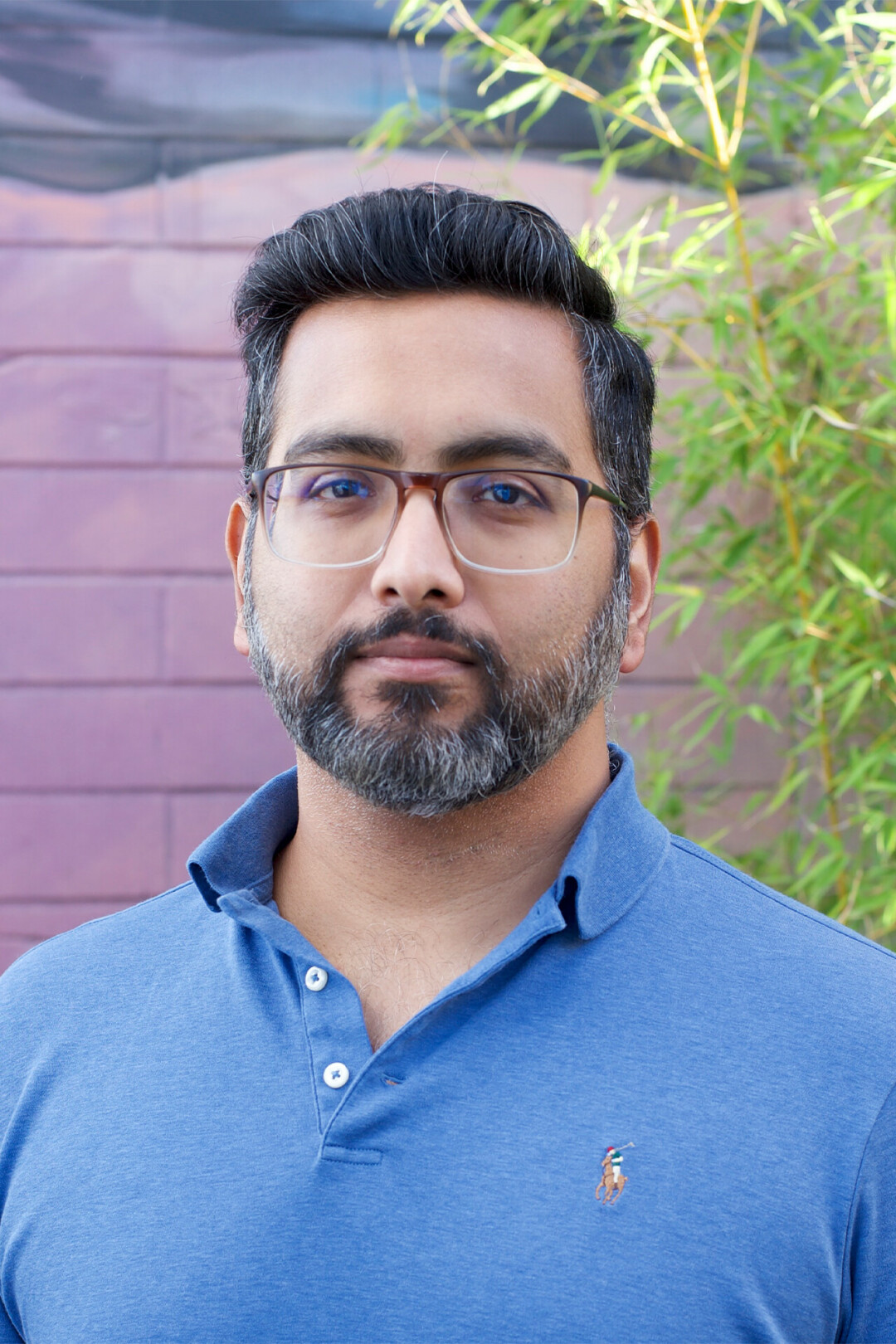
NJ: " 'Sneaky art' is this term that I coined first to (describe) myself – and then to (describe to) other people what it is that I'm doing – that began as an immigrant in North America. (It was) a way to explore my new world, a way to spend time in unfamiliar places and better understand not only the physical environment but also the people. For example, I moved to Eau Claire in 2017 and drawing became this way to figure out, 'how can I spend time at SHIFT cafe?' 'How can I spend time in summer at Phoenix Park?' These were questions that I answered from observing other people ... (drawing) gave a way for me to better understand the people around me, relate with them a little better."
"Eau Claire is where I first registered as a business and as a freelancer. It's where I got my first commission. Volume One is the first time I had my work in print. I was curious to see how cities and towns all over the world allow us to engage with each other, to live our lives and co-exist in harmony. This became sneaky art."
V1: How does the cross-section of your writing pursuits and your identity as a “sneaky artist” impact your perspective of the environments you pass through?
NJ: "It has been an interesting journey thinking about how I want to say something, but also, how do people read things right now. How can words and images live together? ... What is the common humanity we share that helps people enjoy what I do in my little corner, in my little world? So, that's been my job as a writer."
"Art has this incredible ability to say something which is very universal. You don't need to be of Eau Claire or Chicago, or India or Canada in order to immediately get what somebody is trying to communicate. That dynamic, a mood, all of those things are very universal human things that we share. The fact that an image can do that is magical to me – it's a kind of magic that I don't want to ever give up on. The exploration of art and urban sketching and 'sneaky art' for me, was also a way to find what is it that nobody can deny. Art for me is a way to speak at a level that is much deeper than words can be, because words are the battlefield in which we fight each other."

Adam Voith
Traveling from: Nashville, Tennessee
Subjects: Essays, music profiles, novels
Published works: Recommended If You Like (to be published Summer 2026); Little Engines published books and digital magazine (est. 2001); Adam Voith Memos on Substack
V1: How do you manifest the intersections between music and writing through your ventures in publishing and current works in progress?
AV: "I got interested in reading and writing in college – I started making zines primarily influenced by punk rock. Underground music was sort of my guiding light and I was finding ways to apply that ethos to published writing. When I finished college, I had written a book that I wanted to publish; I decided I would self-publish it and started a small publishing company – that company eventually started publishing Little Engines."
"I put stuff on Substack ... I write about music or books or travel and whatever. I really think of it as a a blog. My real energy, especially lately, has gone into this new novel (Recommended If You Like). I've really been living with this one particular story for a long time and really intensely – for the past last few years – while I've like been writing in earnest. As a writer, I just love that idea of you're writing something with breath and you keep working on it to try to answer the book's questions and you're not done until the the questions are answered. (Maybe) you don't even know the answers yourself until you start getting in there."
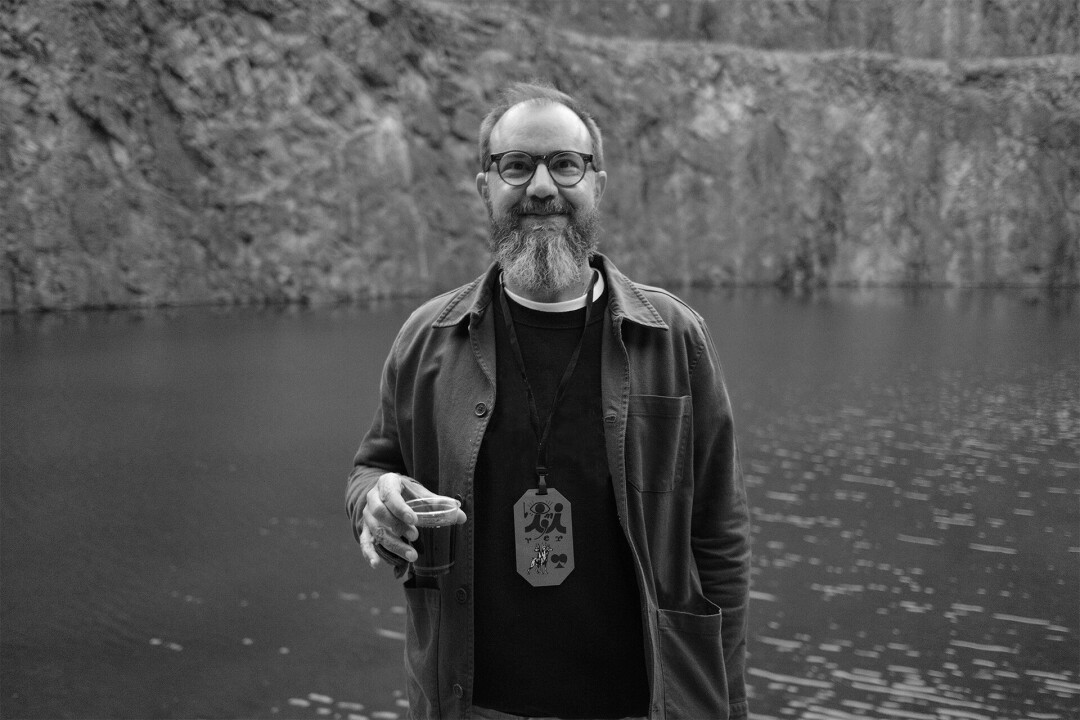
V1: Could you share how your experiences with music booking and previous Eaux Claires festivals have shaped your approach to this year's event and its Writers In Residence?
AV: "I've known Justin (Vernon) forever, I was his booking agent for his whole career until he stopped touring and I retired from that gig. It was a little over a year ago (when) he started saying he might want to revisit the (Eaux Claires) festival. We were just kicking around what that meant – and what that would look like – and (he) asked if I would want to get involved this time."
"I left the music business and I have really thrown myself into writing and publishing – which kind of was my first love earlier in life – and (now) I'm really throwing myself back into (music). I booked up the music with Justin and then the writers, Michael (Perry) and I did together. It was really a combination of me and Perry's tastes and interests; on the music side, it was really driven by Justin's curatorial mind and what kind of stuff he wanted to have musically."
"I want to pursue and surround myself in the lyrical world with people that take it really seriously and then people that are true seekers – people that are digging for meaning and for what it is we're trying to do with words."
"What's most exciting to me are people that are not concerned with necessarily the traditional paths in publishing ... and doing what feels right, what feels true and what feels good."
Brenda Cárdenas
Traveling from: Milwaukee, Wisconsin
Subjects: Ekphrastic poetry, music and visual art, U.S. Latinx voices in writing, creative non-fiction essays, current Wisconsin poet laureate
Published works: Trace (2023); Boomerang (2009); From the Tongues of Brick and Stone (2005); among other literary essays
V1: In what ways does the practice of ekphrastic poetry inform your creative process and how do you navigate the crossroads where verses describe visual arts and other mediums?
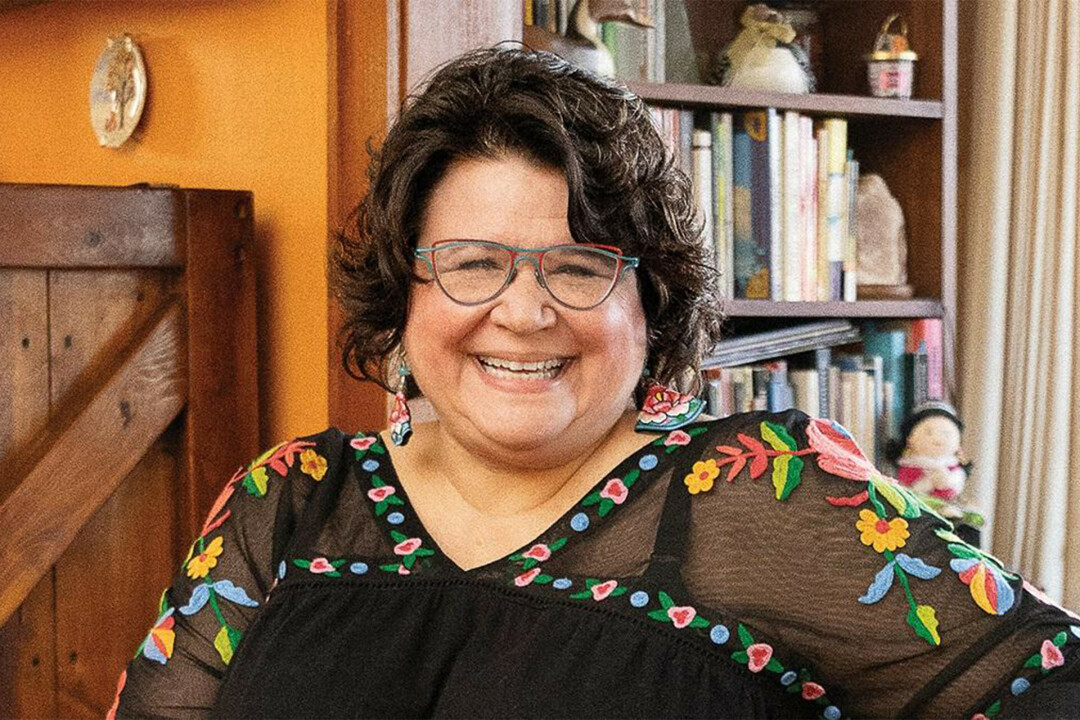
BC: "I write a lot of ekphrastic poetry, which is poetry that is influenced by or inspired by visual art. So, I find myself quite often (writing) in an art gallery or an art museum. Music has also been another inspiration for me besides visual art – or along with it. For poetry ... we often are trying to create an image. We are often thinking about sound: rhythm, cadence, the musicality, the internal music of language. In the past I have had wonderful opportunities to collaborate with musicians, with dancers and choreographers, with visual artists. A couple of more recent, really fulfilling ones, were music based."
"People who are bilingual often mix the languages – not always, but often. If I have created a character on the page who is speaking Spanglish, it's often that they're switching languages just where people naturally switch languages. Other times, when I'm not necessarily in the voice of a character – and maybe I'm writing a more lyric poem – I'm moving back and forth. Some of it has to do with a natural place to switch, but a lot of it has to do with the musicality of the language. The music of the language, of the two languages, coming together. Mexican-American culture is very much a transcultural experience, right? And so why not reflect that in the poem?"
V1: In your current role as Wisconsin’s poet laureate, in what ways do you observe the Midwestern literary scenes influencing the broader creative ecosystems nationally or globally?
BC: "As (poet) laureate, I'm always traveling all over the state and it's been incredible meeting so many people – all different kinds of people, all different kinds of writers. I find Wisconsinites to be pretty welcoming and pretty kind people. I've gone to tiny little towns where I thought, 'no one is going to come to this (event),' and people come. People turn out because there are writers and creatives everywhere – and they are often looking for community. I think that's maybe one of the most important things I can talk about is community and how important that is (to foster) creative community."
"Part of (the poet) laureate's mission is to be the ambassador for poetry in the state, but I think it's also to be the ambassador for creative community and (to) help inspire people to work together to create their own communities of creatives. ... You will always get something different than you would have ever gotten by yourself, because it's that coming together of two minds – and that riffing off of one another – that's just so exciting."
Nicholas Gulig
Traveling from: Fort Atkinson, Wisconsin
Subjects: Poetry, current events, grief, lineage and history, social justice, 2023-2024 Wisconsin poet laureate
Published works: The Other Altar (2024); Orient (2018); Book of Lake (2016); North of Order (2015); among other published poems in literary journals
V1: Describe some of your connections to the Chippewa Valley and how your environment shaped the early trajectories of your work in writing and poetry?
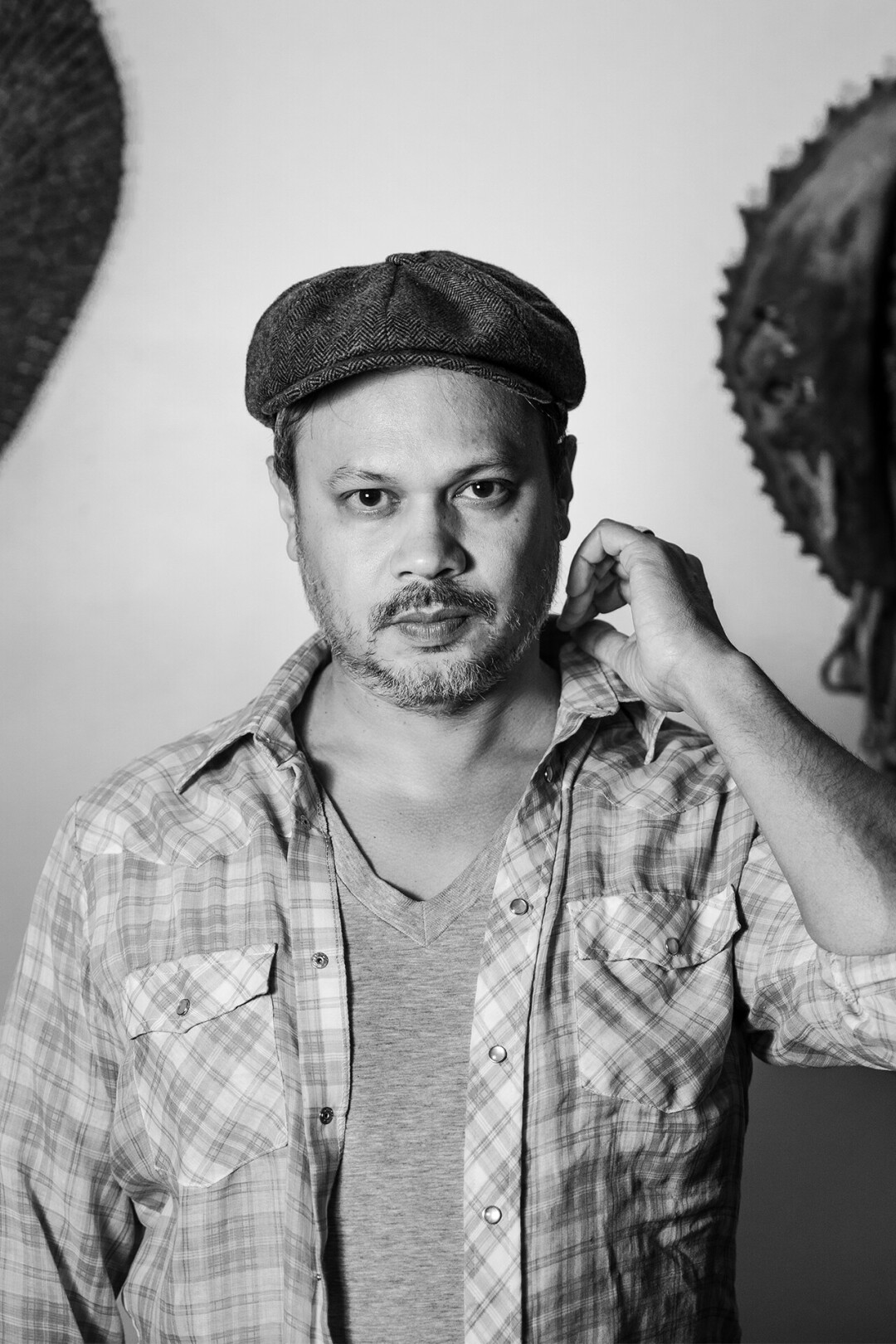
NG: "I started writing poetry around age 13 ... as you are trying to figure out yourself, as you are trying to figure out the world around you. I came under the influence of a group of older classmates, people who were seniors when I was a freshman. They kind of introduced me to the possibility that art could be a way for me to be in the world. The early 90s in Eau Claire – and maybe everywhere – felt like the height of consumerist conformity ... the height of mall culture.
I found these found these kids – who were older than me – who were doing something else. So, for the first time, I found myself sitting and listening and reading lyrics. For me, poetry started there. I wanted to be in bands with my friends. Since I couldn't play any instruments, I had to be the person screaming language. (Poetry) was a place where I could wander around in my feelings of discontent with the culture, which is one way to think about what punk rock (music) is, right?"
"What I didn't realize at the time – and that I wouldn't come to see until much later, as a much older person – (is) that notion of the writer as a solitary individual, expressing emotional experiences, has a really long tradition in Western literature and more specifically the foundations of the lyric tradition.
That is a relationship that I've come to see as 'limited' in really interesting ways. It's something that – as someone who's been doing this for a long time – (I) have been trying to find ways out of, the limits of the lyric tradition."
V1: How do you reckon with your 'Midwest' identity as as a poet and also as someone who is impacted by current events from around the country and world?
NG: "I have a desire to establish myself as a Midwesterner, to explore what that means and explore what the limits of that identity are – and to try to complicate the limits of that identity. The Midwest for so long was a place I was trying to get away from ... in the sense that art was something that happened somewhere else. I don't think that's the case (today) and I want to be an example of the extent to which that isn't the case. I want to stand here in Wisconsin – as a native born (here) – and have my work kind of say as evidence: 'art is something that happens here and it doesn't have to just be landscape.' "
"I'm really concerned with the way my place in the world informs and is informed by – and rhymes and doesn't rhyme with – other people and other places. I don't want to paint a picture of the Midwest as solitary or isolated – or as an idyllic refuge from the world. But rather, I want to paint a picture of the Midwest as a place that's in deep relation with other parts of the world, that exerts an influence on other parts of the world and is itself influenced by other parts of the world."
Traveling from: Durahm, North Carolina
Subjects: Poetry, familial tensions, body awareness, queer and non-binary identities, mental health
Published works: The New Economy (2025); Rocket Fantastic (2017); Apocalyptic Swing (2009); The Last Time I Saw Amelia Earhart (2005); published poems in The New York Times, Poetry magazine, Boston Review, The New Yorker, among others
V1: How might your upbringing in rural settings and with family influence your creative processes and the poetry you will bring to the Eaux Claires festival this July?
GC: "I spent a lot of time on my own and out in the country and really spent a lot of time just daydreaming. I was like a professional daydreamer from day one – imagining different stories, different lives, different bodies, all kinds of stuff. Growing up in a rural space was a real gift to me, in the sense that I was always out in nature.
"I was always meeting people whose lives were in some ways very similar than mine, but also quite different."

"I always say 'sure, there was the closet of being a lesbian or being in a non-binary body,' but none of that compared to the closet of living with a story of deep mental illness that we didn't talk about. ... I was just trying to make meaning of something that we weren't talking about and that, even at 13 years old, was going to be one of the central events of my life.
"New things happen to me every single day, but there was probably that moment of formation – and we all have things like that, in one way or another."
"Every single place we go, every person we meet, every glass of water we drink from a place, has a story attached to it. A festival like this – which is something I'm interested in – (is) celebrating place, acknowledging place and saying, 'why don't you come and be part of it for a little bit?' "
V1: How do you perceive the relationship between your physical identity – the body – and the act of writing?
GC: "I think many of us, initially when we grew up, thought of the body as fixed. It's a fixed form. But, what if in my mind I've dreamed another body? My poems think about – back to day dreaming – what is it to dream another body, another mode of being and have that be a kind of guiding force of a way you live in the world. While, also being in this other body you were born with.
It's a profound thing to be able to think about the form of the poem, but also the form of the vessel one is – and what does it (all) mean? I think there were times in my life where I felt very much trapped in my body, very much trapped in (the) vessel I lived in. I moved into a dream space through that, a poem space through that."
Patrycja Humienik
Traveling from: Madison, Wisconsin
Subjects: Poetry, prose, performance arts, language in writing, activism through art
Published works: We Contain Landscapes (2025); prose features in Catapult, Hayden's Ferry Review, among others; published poems in The Los Angeles Review, Michigan Quarterly Review, The New Yorker, Bellingham Review, among others
V1: How would you summarize your journey as a poet and what currently motivates your writing – today and looking ahead?
PH: "I have been a writer and reader since I can remember, scrawling poems and stories under the covers with a flashlight. I had to memorize poems in my first language at a very young age, while attending Polish school on Saturdays. I learned quickly how difficult human experience can be to translate, across languages and within a single one. The path to my first book, We Contain Landscapes, was a meandering one. I fell in love with dance and music as I struggled through the limitations of language. I worked many jobs en route and it took a while to give myself permission to write more and to share it. ... I wrote much of my first book and sold the book without an agent, without an MFA and without coming from a family of writers. But I did not do it alone."
"I wrote in my first book, 'Don’t keep your grief from me.' I am motivated in part by the awareness that I and the people I love, and people I’ve never had the chance to know, will die. It’s a basic fact of living, but one that is not readily addressed in the U.S. There doesn’t seem to be much space for grief in this culture."
"I am also moved by the sensuous, by beauty, by desire. Beauty is not just visual but felt. What one finds beautiful can be the source of our deepest pleasures and even self-knowledge. ... I am interested in what more is possible. In that sense, both honoring, interrogating and expanding what I find beautiful and what I desire inform the emotional content of my work."
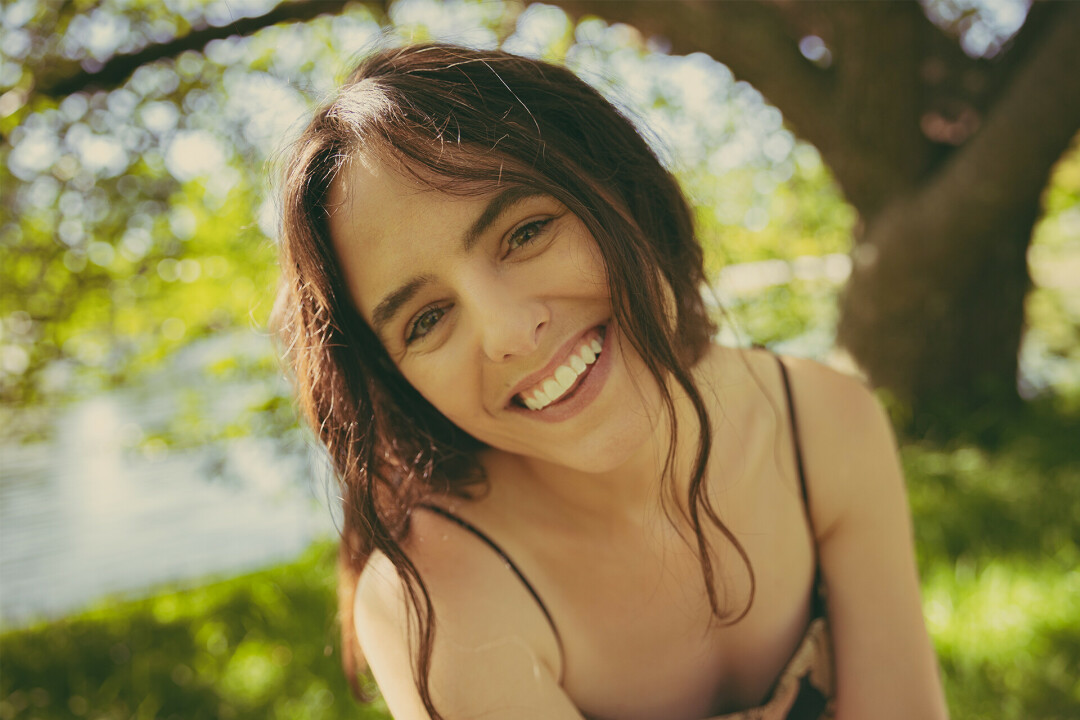
V1: Do you have any reflections on the current writing scenes, or the role of language and poetry in a digital landscape?
PH: "There are many stunning multilingual writers writing today and compelling work in translation being brought into English. I am grateful for the many writers resisting the bizarre (and financially incentivized) pressures to collaborate with AI; these extractive technologies, reliant on water and other people's labor, are already showing to have dangerous consequences on our minds. They also have very dull consequences on writing and art. There seems to be an obsession with finishing everything faster—to be able to say you've done a thing rather than experience it. We live achy, strange, beautiful, sometimes hilarious, lives, full of failures. I think failure is vital to writing well. Skipping that process makes for boring, unmoving art.
"Poetry has shape and sound. Poetry can move us, touch us. I think there’s a lot of reasonable anxiety about writing and literacy right now, but I also regularly see people reading books out in the world, attending readings...I am of the belief that literature will never die. I think people want to be moved."
Visit the 2026 Eaux Claires music festival webpage, eauxclaires.com, to learn more about the artist lineup from July 24-25 in Carson Park (100 Carson Park Dr., Eau Claire).