

It's The Tree City USA Program's 50th Anniversary – But What’s A Tree City?
if you live in Chippewa Falls, Eau Claire, Altoona or Menomonie, you’re living in a certified Tree City
McKenna Scherer, photos by Beau Buckmaster / Up Up & Around
While Arbor Day has already come and gone (locally, it was recognized in April), the Arbor Day Foundation is celebrating all year long.
2026 marks the global nonprofit’s 50th anniversary, though there are plenty of people who don’t know what its core program, Tree City USA, is – let alone their likely residing in one.
Tree City USA is one of the Arbor Day Foundation’s oldest programs, founded by a small group of people who envisioned a greener, healthier nation and hoped to inspire nationwide change.
What began as a 16-state movement in 1976 has flourished into a 50-state, nationally (and internationally) recognized program.
Nearly 190 Wisconsin communities – over 60% of the state – are Tree Cities, well above the national average of 48%.
Locally, most Chippewa Valley residents live in a Tree City, whether they realize it or not. Chippewa Falls has been a certified Tree City for 36 years; Eau Claire is in its 47th year; Menomonie is also in its 36th year; Altoona is in its seventh; neighboring communities like Stanley and Thorp, too, hold the certification.
Communities must annually meet or exceed the four Tree City USA standards to be recognized:
- Have a tree board or department. Identify who is responsible for community trees.
- Have a public tree care ordinance. Establish community-wide laws that govern public tree care.
- Have an annual expenditure of at least $2 per capita for community tree care activities. The expenditures include tree planting and initial care, tree maintenance, tree removal, management, utility line clearance, and volunteer hours.
- The community must observe Arbor Day and have a signed proclamation. Arbor Day can be celebrated any day of the year.
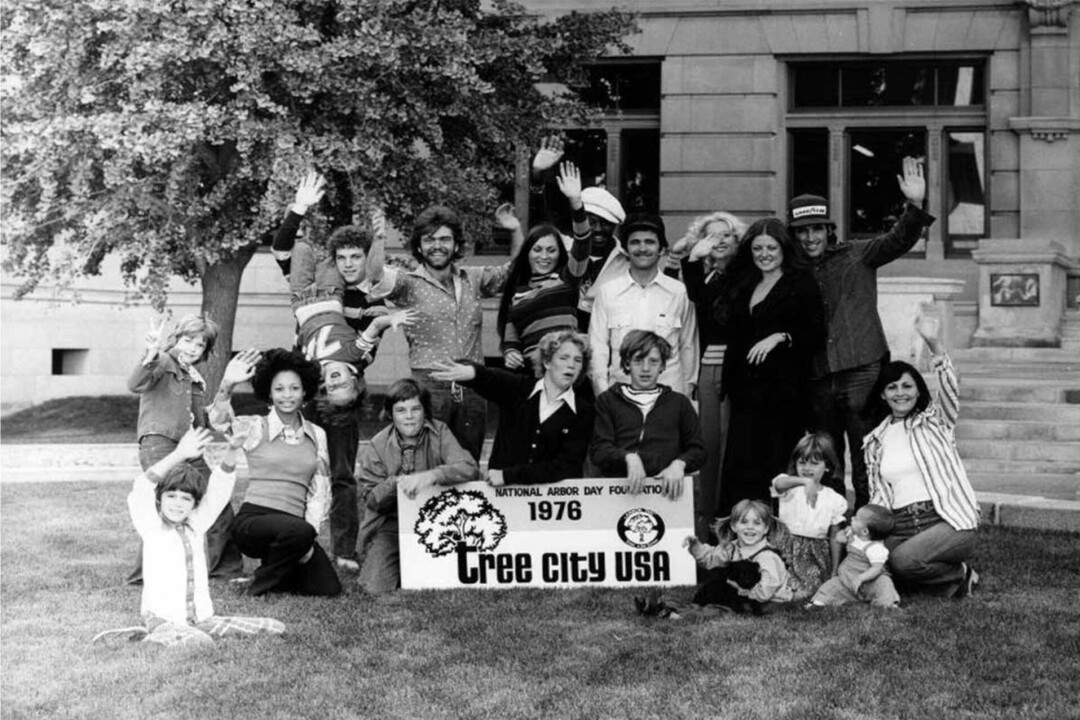 The Arbor Day Foundation created the Tree City USA program in 1976. Today, 50 years later, all 50 states participate in the program – alongside the international countries who do, too. (Photo via Arbor Day Foundation's website)
Nearly 190 Wisconsin communities – over 60% of the state – are Tree Cities, well above the national average of 48%. That level of participation, in the badger state, contributes to the roughly $16 per capita invested in tree-related efforts. That’s also above the national average, which sits under $11 per capita.
All that data is particularly relevant when communities think about their part in caring for the environment. That can be done in myriad ways, spanning cautious consumption to responsible transportation efforts, carbon-neutrality commitments and more.
As the Arbor Day Foundation puts it, “if the environment is our planet’s body, trees are a vital organ, helping to produce conditions ripe for life.”
As described by the Arbor Day Foundation, some of the key reasons why places should become a Tree City USA are:
- Trees help absorb the sounds of traffic in urban areas by 40%
- Neighborhoods with trees are 7-9 degrees cooler than those without
- Trees reduce energy costs up to 25% by shading buildings and protecting them from winter winds
- Homes with trees have higher property values
- Green space plays a major role in improving mental and physical health
- Planting and maintaining trees absorbs carbon dioxide in the atmosphere, mitigating the effects of climate change
- Publicly demonstrating your commitment to the environment is a great way to build pride among residents, as well as position your community as an attractive place to live. To help you share your award, the Arbor Day Foundation sends signs, flags, press releases, and other materials after your acceptance
For the program's part, over 500 million trees have been planted across more than 60 countries – some 30,000 of those are rooted in Wisconsin – and billions of dollars have been invested in tree-related efforts.
Supporting the planet's 'body,' if you will, can be as simple as recognizing Arbor Day, spending time at the University of Wisconsin-Eau Claire Arboretum (the local university, alongside the University of Wisconsin-Stout Polytechnic, is a Tree City Campus), or planting your own tree at home.
Visit the Arbor Day Foundation website to learn more about its efforts and the Tree City USA program. Learn more about the City of Eau Claire's Forestry Department online.